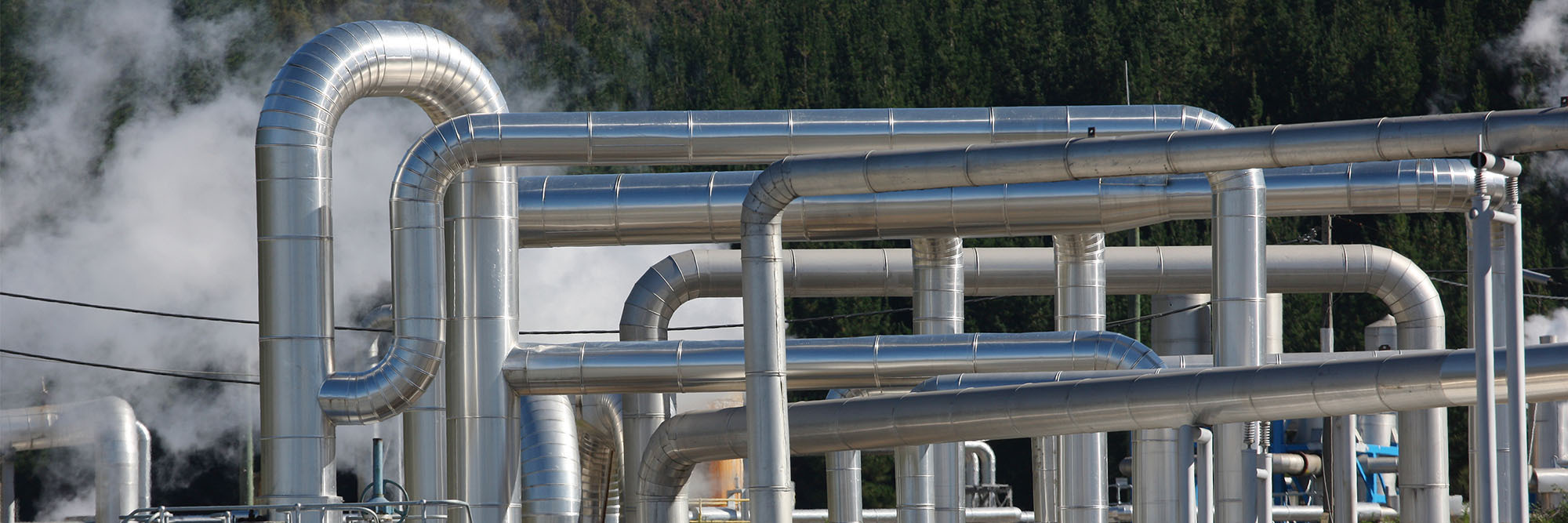
Technology is playing an increasingly central role in shaping what New Zealand’s future energy system looks like. From ambitious clean energy generation projects to platforms giving consumers greater control over when and how they use power, innovators are developing solutions that could transform how we produce, distribute and consume electricity. We explore three significant developments (nuclear fusion, superhot geothermal, and demand flexibility), what they mean for investors, developers and policymakers, as well as support pathways for innovators.
Nuclear fusion: New Zealand's long-horizon bet
Wellington-based OpenStar Technologies is one of the world's most closely watched fusion start-ups and one of New Zealand's most ambitious deep-tech investments.
Nuclear fission, the process behind today’s nuclear power plants, splits a heavy atom into lighter ones. Fusion does the reverse: it combines two atomic nuclei, releasing several times more energy and producing no long-lived radioactive waste. The challenge is sustaining the extreme pressures and temperatures required, conditions found inside the sun itself.
OpenStar is the only company in the world pursuing a "levitated dipole" reactor design for commercial purposes. It has already developed a prototype device that created and confined the ultra-hot ionised gas needed to trigger the fusion reaction, but further prototype generations are needed. The Government's Regional Infrastructure Fund (RIF) is lending up to $35 million to support construction of a specialised facility for OpenStar’s next machine.
For investors and policymakers: While OpenStar is aiming for a working fusion reactor by the early 2030s, commercial fusion at scale is broadly expected to remain a 2040s proposition at the earliest. The near-term value lies in IP and talent retention: as OpenStar scales, the question is whether New Zealand can retain economic benefit from the technology it has helped incubate. To avoid practical bottlenecks to commercialisation of nuclear fusion here, it may be timely for policymakers to consider whether bespoke regulation will be required. The International Atomic Energy Agency has this year published a report considering international experience in the regulation of fusion facilities.
Superhot geothermal: Potentially a world-first in New Zealand's backyard
New Zealand's superhot geothermal energy project, GeoShot NZ, is attempting something that has never been done at commercial scale anywhere in the world: harnessing a geothermal resource so deep and so hot that it operates beyond the physical properties of conventional steam.
At temperatures exceeding 374°C, water deep below the Earth’s crust enters a supercritical state, neither liquid nor gas, holding up to three times more energy than conventional geothermal fluids. Accessing this requires drilling 1–3 km deeper than traditional geothermal wells.
The Rotokawa geothermal field near Taupō has been selected as the first well site, with Todd Energy as preferred lead drilling contractor. Early results are unlikely before 2028, and commercial deployment remains a post-2030 prospect. Up to $60 million has been ring-fenced from the RIF. The project includes MBIE’s Kānoa unit, Earth Sciences New Zealand, the Tauhara North No.2 Trust as landowners, and Mercury, a strong model of collaboration between Government, iwi, and industry.
New Zealand is not alone in this frontier: Iceland's Deep Drilling Project plans to drill a volcanological research and monitoring well this year and Japan is pursuing comparable research.
For investors and policymakers: Resource consenting and ongoing engagement with iwi and landowners will be critical enabling conditions for the project and for any future scale-up. If successful, superhot geothermal could provide near-limitless baseload renewable energy, addressing one of the hardest problems in New Zealand's electricity system, and position New Zealand as a leader in a technology with global value.
Demand flexibility: Turning consumption into an asset
As New Zealand's electricity system evolves, so does the ability to use consumer demand, not just generation, as a grid resource. "Demand flexibility" platforms connect smart devices such as EV chargers, heat pumps and hot water cylinders to the grid, enabling them to automatically respond to price signals and reduce peak demand without requiring consumers to take any active steps.
Several New Zealand initiatives are underway, for example:
- Basis has developed residential smart panel technology, devices installed at a building's connection point that provide real-time energy flow data, enabling automated load management, EV charging coordination and demand response participation. The Electricity Authority's Power Innovation Pathway enhanced support programme is supporting a multi-household trial.
- Blackcurrent, an energy management solutions business, is scoping a wholesale aggregation pilot which is also being supported through the Power Innovation Pathway.
- Vehicle-to-grid (V2G): EECA is currently conducting a V2G trial in Queenstown, exploring how EVs can discharge electricity back into the grid and inform future policy. An urban V2X trial is also under consideration. Aggregated EV batteries could eventually represent a significant dispatchable resource, but standardised hardware, retailer participation, and consumer incentive structures all need to be in place first.
For investors and policymakers: Demand flexibility is commercially viable today for some use cases, but realising its full system-wide potential requires distribution pricing reform and clearer rules for integrating distributed energy resources (DER), both active workstreams at the Electricity Authority. The regulatory trajectory is positive; the question for platform developers is how quickly consumer adoption scales. For network businesses and retailers, these platforms represent both a competitive threat and a partnership opportunity.
Support for innovators: Finding your pathway
Good ideas need the right environment to thrive. The New Zealand Cleantech Impact Report 2026, released last month, shows cleantech companies are scaling quickly, but need more capital and strong support. New Zealand's innovation ecosystem is well-developed but navigating it can be complex. Key resources specific to the energy sector include:
- Ara Ake: Collaborates with innovators to support demonstration and commercialisation. Its Energy Innovation Value Chain maps available organisations and funding from R&D through to deployment, a useful first-stop resource.
- New Zealand Trade & Enterprise: Provides guidance and financial services for innovators with global ambitions.
- The Electricity Authority’s Power Innovation Pathway: Offers regulatory information and general support on an ongoing basis, plus enhanced support during specific priority rounds. Applications for general support are always open.
- EECA: Lists current funding opportunities on its website, including for high-temperature heat pump technology. Watch for consultation opportunities, such as the recent (now closed) “AI for energy efficiency” RFI.
- Regional Infrastructure Fund: Invests in projects boosting regional growth, resilience and productivity.
MinterEllisonRuddWatts advises innovators, investors and developers across all stages of energy technology development, from regulatory engagement and resource consenting to structuring investment and commercialisation. If you are working in this space and would like to understand the legal landscape, please get in touch with one of our energy or technology specialists.
Key contacts
Speak with one of our experts.