Building more renewable energy infrastructure is critical to New Zealand's energy transition. But as the sector accelerates investment in new generation and storage, another challenge is emerging: how to build that infrastructure in a way that is itself sustainable. In May 2026, Meridian Energy became the only New Zealand company included in S&P’s Dow Jones Best-in-Class World Index1, placing it among the world’s most sustainable companies and in the top 10% of utilities globally. Natasha Hood, Partner and energy sector co-lead at MinterEllisonRuddWatts, sat down with Lloyd Clark, Meridian's Environmental and Sustainability Design Manager, to zero in on the company’s sustainability journey and what others can learn from it.
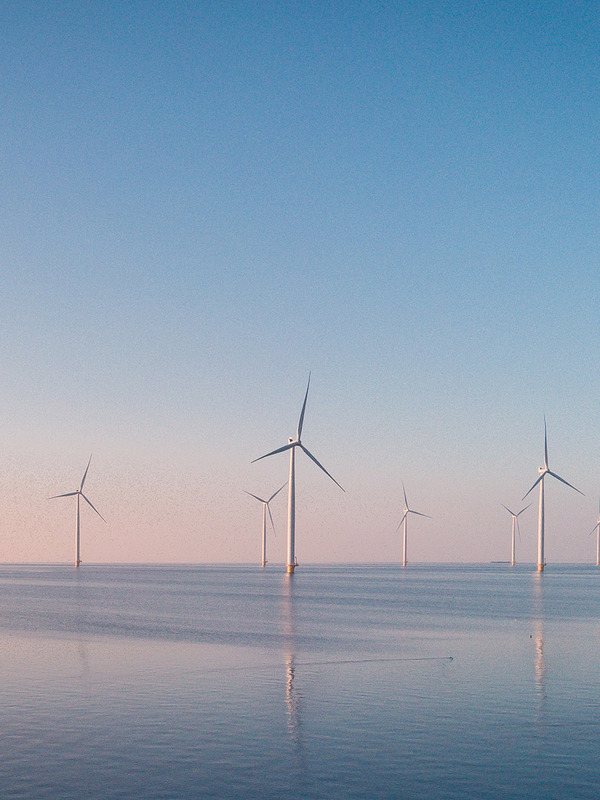
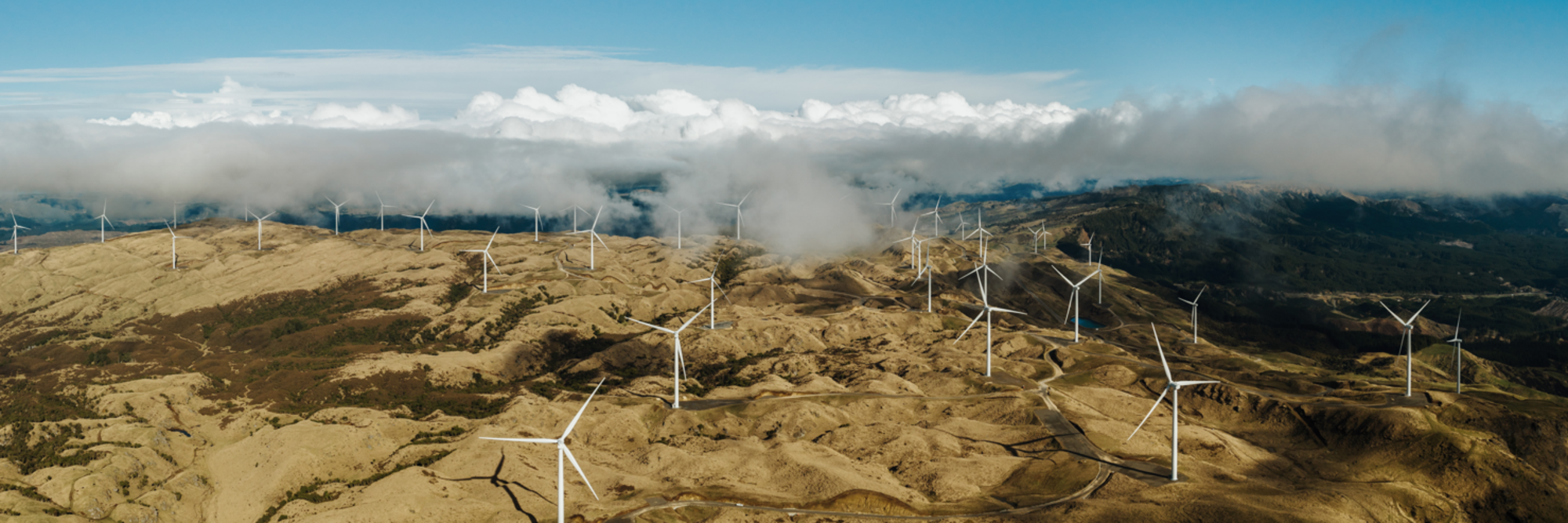
Meridian is New Zealand’s largest renewable energy generator and a major electricity retailer. Following a lengthy development hiatus due to a period of flat demand and political uncertainty, Meridian started construction of the 176MW Harapaki Wind Farm near Napier in 2021. In 2023, the company set its “7x7 goal” of building seven large-scale renewable generation or storage projects by 2030. Progress is well underway, with projects spanning wind, solar and battery developments across the country. But Meridian is focused on more than expanding renewable generation. It is also looking at how projects can be delivered more sustainably. Recognising that the carbon footprint of its development division was triple the rest of the business, Meridian invested in a specialist environment and sustainability team, led by Lloyd.
Harapaki Wind Farm: A learning platform
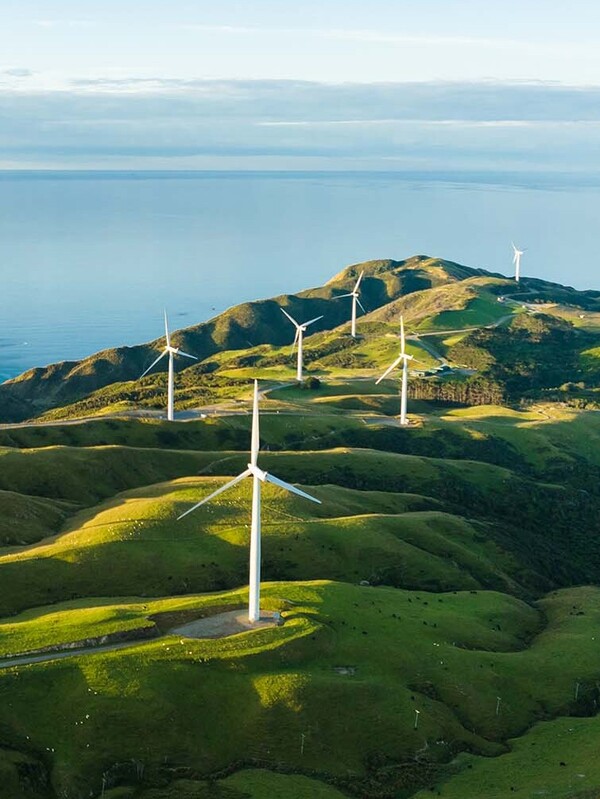
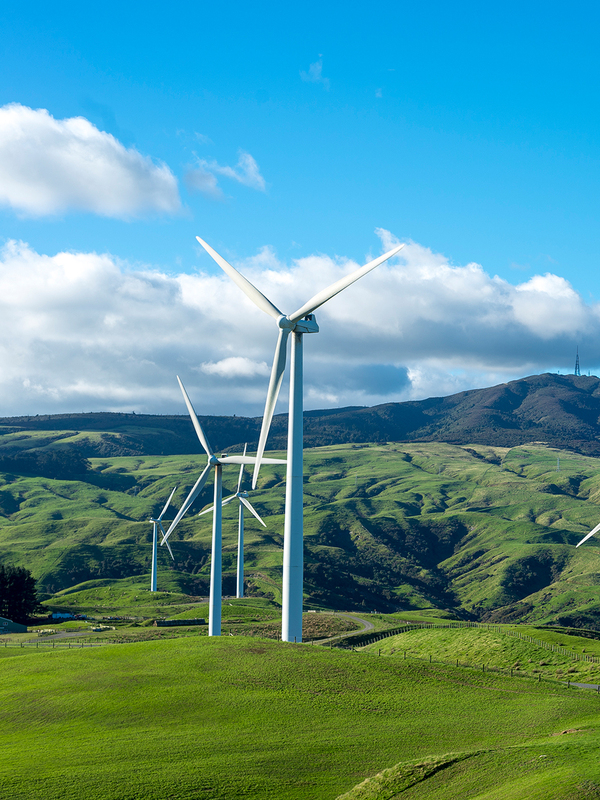
Harapaki Wind Farm, which was completed in 2024, serves as a learning platform for Meridian. The team working on Harapaki set out to make it New Zealand’s most sustainable wind farm. It created a Sustainability Management Plan (SMP) that included various Key Performance Indicators (KPIs) and metrics such as employing and spending within local communities. Those targets were exceeded: 48% of the workforce was local and ~$100m was spent locally.
Community outcomes became a defining feature of the project. During construction, the Hawke's Bay region was devastated by Cyclone Gabrielle, and Meridian's project team responded by providing helicopters, generators, personnel, and other resources to support affected communities. The team's efforts were recognised through a Red Cross silver medal and Meridian's selection as a finalist in the Social Procurement Award category at the 2025 NZ Energy Excellence Awards. More importantly, Lloyd says the experience cemented trust and strengthened Meridian's connection with the local community. Community survey results have remained extremely positive in the years following the project's completion.
As Meridian's first major development project for several years, Harapaki helped identify where emissions can arise across the construction lifecycle. Rather than setting carbon targets at the outset, Meridian focused on collecting emissions data to better understand its carbon hotspots. While diesel use was significant, the largest source of emissions (61%) proved to be turbine components manufactured overseas. The carbon footprint of that componentry was around four times higher than expected because the supplied turbines came from a different source than the one Meridian anticipated.
One of the main lessons from Harapaki was that sustainability and commercial efficiency can go hand in hand. Two sustainability initiatives saved tens of millions of dollars on trucking requirements: constructing a water reservoir and on-site water take, and sourcing aggregate on site. Both helped reduce emissions associated with trucking, and the reduction in heavy vehicle movements also helped preserve the local roading network for the community.
After Harapaki: Embedding sustainability
Meridian now uses a checklist based on the lessons learned from Harapaki to embed sustainability across all development projects. Once a project is likely to proceed, Meridian brings together key external personnel (such as ecology, archaeology, civil and electrical design consultants) for a sustainability workshop. Lloyd says that involving contractors early, where possible, also allows you to test the practicality of your sustainability ambitions and achieve further efficiencies.
Sustainability is then embedded throughout project delivery. Contractors must have approved SMPs, provide emissions data (ideally backed up by Environmental Product Declarations or Life Cycle Assessments) and meet sustainability KPIs linked to milestone payments. Every project meeting begins with a health, safety or sustainability moment and ends with the question: what have we done to save carbon? Lloyd likens this approach to the evolution of health and safety: "making sustainability part of everybody and everything and just filtering it, weaving it through the whole project and the people, and getting buy-in."
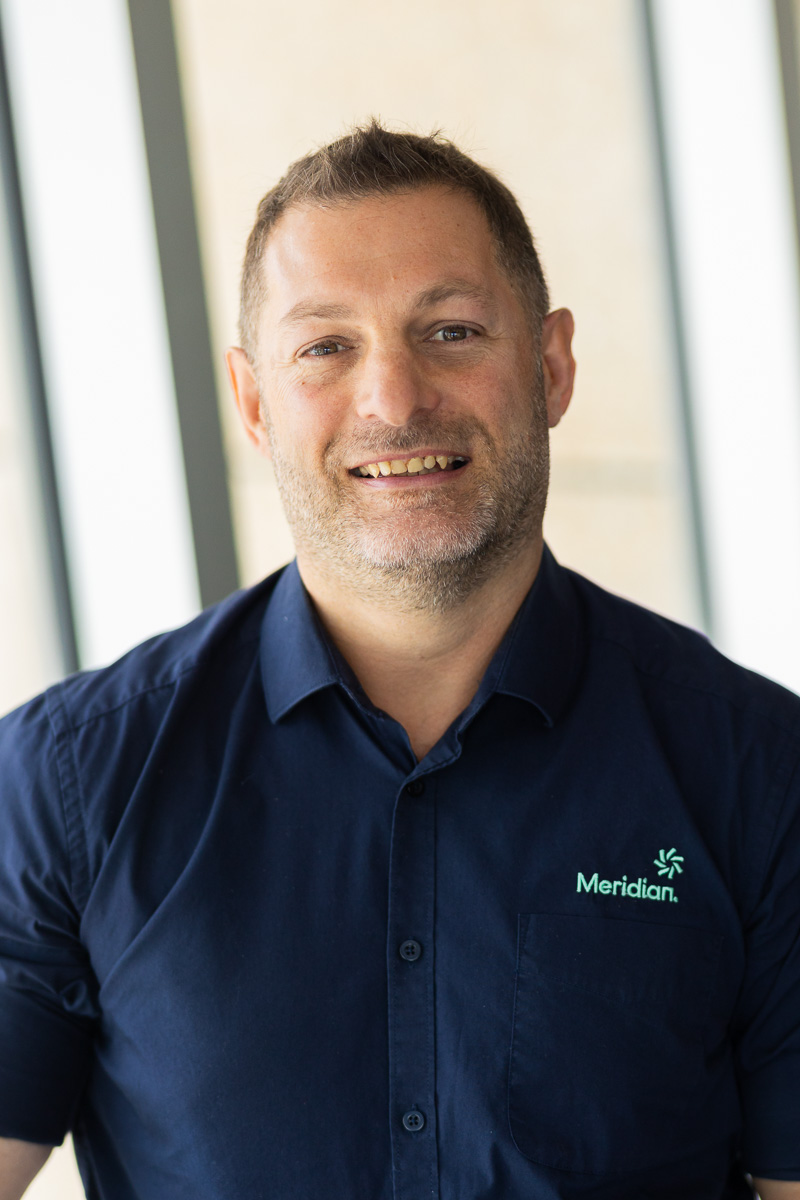
Making sustainability part of everybody and everything and just filtering it, weaving it through the whole project and the people, and getting buy-in.
Projects must also comply with cultural, archaeological and stakeholder management plans. Meridian works closely with site kaitiaki, integrating them into project teams and providing extra training in areas such as bird monitoring and erosion control.
Te Rere Hau Wind Farm: Sustainability in action
Following its acquisition of NZ Windfarms last year, Meridian took over what will be New Zealand’s first wind farm repowering project. Forty new turbines will be designed, constructed, and operated at Te Rere Hau (TRH), near Palmerston North, lifting its generation capacity from 45.5MW to 172MW. Firstly, though, the original 91 turbines must be decommissioned. And with a company target of 100% diversion from landfill for TRH, Meridian must find a home for 260 different turbine components from each of the existing turbines.
Lloyd describes TRH as one of the most fascinating (and fun) projects he’s worked on. With few international examples to follow, and bespoke turbines to deal with, the company has worked with industry, the community, and students at Auckland University to identify opportunities for reuse, repurposing, and recycling. Meridian has found a potential solution for every component. For example, Golden Bay will mulch and mix the turbine blades with other timber products to use as furnace feedstock, primarily for drying cement.
Using lessons from Harapaki and the subsequent Ruakākā Battery Energy Storage System (BESS) project, Meridian has set more detailed carbon targets for TRH. These include trying to reduce carbon emissions on the ground, for example by reducing idling time for plant and heavy machinery to below 35%. Meridian managed to reduce idling machinery time on Harapaki from 60% to 40%. At Ruakākā BESS, Meridian’s contractor, United Civil, embraced the challenge by fitting idling monitors onto all vehicles on site, ultimately reducing idling time to 25%.
Working with suppliers to reduce the emissions from main component supply will be a key action on TRH and future projects. As Harapaki showed, knowing where your componentry is coming from is important for both quality and sustainability. If you are expecting major equipment to be manufactured in a jurisdiction with a largely renewable energy supply, any change to that jurisdiction could significantly affect a project’s sustainability impacts. Lloyd suggests ensuring that your contractors are contractually obliged to provide verifiable emissions data and being clear on what you need. Data is not easy to get, and many international suppliers have never had to do this before.
Looking ahead
For Lloyd, the key lesson is simple: sustainability works best when it is embedded from the outset rather than treated as an add-on. Whether through contract requirements, emissions measurement, community engagement or circular economy initiatives, Meridian's experience shows that meaningful sustainability outcomes require deliberate planning and accountability. Lloyd sees two important enablers of success: embedding sustainability across whole project teams rather than relying on a single specialist, and stronger legislation or guidance. He points to overseas frameworks that provide clearer direction on end-of-life solutions for wind turbines and other infrastructure assets.
As New Zealand accelerates its renewable energy build-out, the challenge will be delivering new infrastructure in a way that creates long-term environmental, social, and economic value. Meridian's approach offers a practical example of what that can look like in action.
Footnote
1 The Dow Jones Best-in-Class World Index comprises global sustainability leaders as identified by S&P Global through the Corporate Sustainability Assessment (CSA). It represents the top 10% of the largest 2,500 companies in the S&P Global BMI based on long-term economic, environmental, and social criteria.
Key contacts
Speak with one of our experts.